


by Leanne Mordue on 1 Dec 2025, 14:57:28

When you invest in marketing, the big question is always the same: Will this actually bring in more customers? For many business owners, the frustration comes from trying new tactics, redesigning websites, or running ads, only to be left wondering if the changes made any real difference.

A/B testing solves that problem. Instead of relying on what you think might work, it lets you test two versions of a page, an ad, or an email side by side and use the data to see which one works better.
This is important because even small changes, whether a headline, a button, or the way a form is laid out, can dramatically affect how many people choose to contact you. One of our clients increased their conversion rate from 0.5% to 3.5% in under two years by combining structured A/B testing with conversion reviews. That’s a seven-fold increase in leads, achieved without needing to double their traffic or ad spend.
In this guide, we’ll show you how A/B testing works, where to use it, and how to avoid common pitfalls. You’ll see how it fits into a broader marketing strategy and how, done consistently, it can help you generate more leads, improve ROI, and grow your business.
What Is A/B Testing?
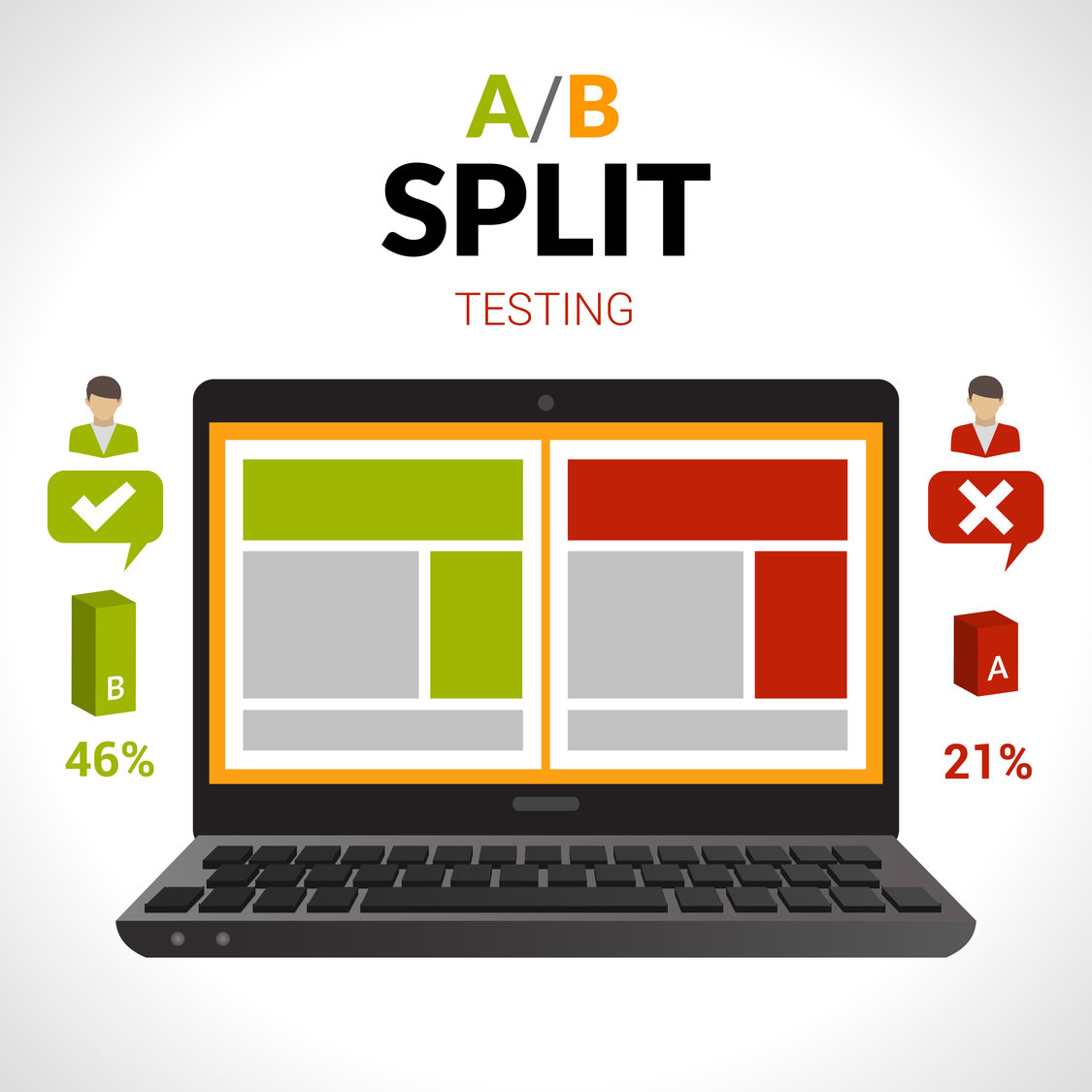
If you want your website, emails or ads to generate more leads, you need to know what actually works. That’s where A/B testing, also called split testing, comes in. At its simplest, A/B testing means comparing two versions of something, for example, a page layout, a call-to-action button, or an email subject line, to see which one gets the better response.
Think of it like running a science experiment on your marketing. You start with a clear objective, make one change, test it with part of your audience, and then measure the outcome. Over time, you keep building on the small wins: a clearer headline, a stronger call-to-action, a cleaner design, and those incremental improvements can add up to a big increase in enquiries and sales.
The power of A/B testing is that instead of relying on gut feel or copying competitors, you use real data to guide your marketing decisions. And unlike multivariate testing, which looks at multiple changes at once and can be complex, A/B testing keeps things simple, focusing on one change at a time so you get clear, reliable results.
In short, A/B testing gives you the confidence that the changes you’re making will actually help you generate more leads and sales.
Why Does A/B Testing Matter?

When you’re investing time and money into marketing, you need to know that it will deliver results. A/B testing gives you the evidence you need to make smarter decisions. Instead of relying on gut feel or what your competitors are doing, you get hard data that shows which option works best.
This matters because your website, ads, and emails are often just one small change away from generating significantly more leads. By testing headlines, layouts, or call-to-actions, you can discover what really resonates with your audience and what drives them to take action.
At JDR, we see this every day. For example, one client saw their conversion rate jump from 1.49% to 3.92% in just six months after we tested and rolled out a new page design. Another achieved a 7x increase in conversions over two years through continuous A/B testing and reviews. These aren’t small uplifts. They’re the difference between struggling for enquiries and having a steady pipeline of new business. You can see these and other examples of conversion rate optimisation results here.
A/B testing helps you:
- Remove the guesswork – No more wasted time or budget on changes that don’t work.
- Improve conversion rates and ROI – Get more leads from the same traffic, often at a fraction of the cost of buying more visitors.
- Stay agile – As customer behaviour shifts, testing helps you keep improving instead of falling behind.
- Create better customer experiences – Small improvements in clarity, usability, or relevance all add up to a more professional, trustworthy impression.
Over time, this culture of ongoing optimisation gives you a stronger brand, with better and more predictable results.
The Iterative Testing Process
A/B testing works best when you treat it as an ongoing cycle, not a one-off experiment. Each test gives you a clearer picture of what works for your audience, and those insights guide the next change. Over time, the small improvements add up to big results, such as more leads, more enquiries, and ultimately more sales.
The process itself is simple:
- Define your goal – Decide what you want to improve, whether that’s form completions, downloads, or calls.
- Choose one variable – Focus on a single element like a headline, button colour, or form length.
- Create two versions – The original (A) and a variation (B) that changes only the chosen element.
- Split your audience – Show each version to a fair share of visitors to keep results balanced.
- Measure results – Track conversions and analyse the data to see which version performs best.
Then you repeat the process, using what you’ve learned to inform the next test. This is what we mean by iterative testing: a continual cycle of learning and refining that keeps your marketing agile and effective.
The key is to keep moving forward. Every test, whether it wins or not, teaches you something useful about your audience. Over time, this builds into a much deeper understanding of what makes people enquire, trust you, and buy from you.
What Types of A/B Testing Are There?
You have two main options when you test: A/B split testing and multivariate testing. Both help you improve results; they just suit different situations.
A/B Split testing compares two versions that differ in one key element, for example, a headline, a call to action, or a form length. It is quick to set up, easy to understand, and ideal when you want clear answers without tying up lots of budget or time. In our experience, most early wins come from simple A/B tests, because you isolate one change and see its true impact.
Multivariate testing changes several elements at once on the same page, for example, headline, image, and button text, to learn how combinations perform together. It is powerful when you are optimising an entire layout or template, but it needs higher traffic and more time to reach reliable conclusions. It also demands tighter planning and analytics, which is why we usually use it on high-traffic pages during larger redesigns.
Which Should You Use?
- Start with A/B testing when you want quick, reliable insights, especially if traffic is modest.
- Use multivariate testing when you are redesigning a busy page or template and need to understand how multiple elements interact.
- If you are unsure, begin with A/B tests to find obvious wins, then step up to multivariate once you have momentum and sufficient traffic.
- Keep both approaches within a broader plan, strategy first, then continuous testing to convert more visitors into leads as part of Step 4 of our 6-step system.
By choosing the right method for the job, you get meaningful results faster, you reduce risk, and you keep improving conversion rates without wasting budget.
Where Can I Use A/B Testing?
A/B testing isn’t limited to one part of your marketing. You can apply it anywhere you want more enquiries, whether that’s on your website, in your emails, or across paid ads. The key is to test the elements that have the biggest influence on whether someone becomes a lead.
1. Landing Pages
Your landing pages are where visitors decide if they’ll take the next step. Small tweaks here can have a big impact. For example, testing different headlines, layouts, or call-to-action buttons can reveal which version persuades more people to fill in your form.
2. Email Campaigns
Email is still one of the best tools for reaching prospects. With A/B testing, you can try different subject lines, send times, or call-to-actions to see what gets more opens and clicks. Even a small lift in click-through rate can mean dozens of extra leads every month.
3. PPC Ads
Every click on your ads costs money. Testing ad headlines, descriptions, and display URLs ensures you’re only paying for the versions that bring in the best results. By refining ads this way, you can lower your cost per lead and make your budget go further.
4. Website Calls-To-Action
Your website should guide visitors towards taking action. Testing button wording, colours, or placement helps you identify what gets more people to click.
5. Social Media Ads
Platforms like LinkedIn and Facebook are competitive spaces. Testing images, headlines, or engagement prompts helps you stand out and attract more of the right people. The data quickly shows you which ads are worth scaling up and which to drop.
The beauty of A/B testing is that it works across all these channels. By running small, simple tests in each area, you can steadily improve performance everywhere, getting better ROI from your marketing as a whole.
How Do I Use An A/B Test Calculator?
One of the challenges with A/B testing is knowing whether your results are reliable or just down to chance. This is where an A/B test calculator comes in. It’s a simple tool that takes the guesswork out of interpreting results, so you can make confident, data-driven decisions.
Why it matters
If you’ve made a change and enquiries go up, you want to be sure it’s the change that caused it and not just a random spike. A calculator checks the statistical significance of your test, in other words, whether the improvement is real and repeatable.
The benefits are straightforward:
- It simplifies complex calculations so you don’t have to.
- It gives clarity on whether a test “winner” is genuine.
- It supports better decision-making, meaning you can act with confidence.
How it works, step by step:
- Gather your A/B test data - the number of visitors and conversions for both versions.
- Enter these numbers into the calculator.
- Review the result - most calculators will show you a percentage confidence level.
- If your test is at 95% confidence or above, you can be sure the winning version really does perform better.
- If not, let the test run longer or rethink what you’re testing.
A quick example:
Let’s say one of your landing pages gets 1,000 visits. Version A generates 10 enquiries, Version B generates 18. At first glance, B looks better but an A/B calculator will confirm whether that increase is statistically significant or could have happened by chance. If the calculator shows 95%+ confidence, you know it’s worth rolling out Version B across your site.
What Are The Best Practices For Effective A/B Testing?
A/B testing can transform your marketing when you follow the right approach. Done properly, it gives you reliable answers about what works, and helps you turn more of your existing traffic into leads and sales.
- Test one thing at a time - if you change multiple elements at once, you’ll never know which made the difference. Keep it simple: test one variable, like a headline or button, so you can clearly see its impact.
- Run tests for long enough - don’t jump to conclusions too quickly. A test needs enough data before you can be confident in the result. Cutting it short is one of the fastest ways to waste time and money.
- Use proper tracking tools - trying to track A/B results manually is slow and often inaccurate. Software like HubSpot, VWO, or Optimizely will automate the data collection and give you clear reports, saving you time and effort.
- Let data, not opinions, guide you - it’s easy to fall into the trap of assuming you know what will work. But even small details can surprise you. Analyse the results and make decisions based on the numbers, not gut feel.
- Be aware of biases - randomly splitting audiences and staying objective in your analysis ensures you’re testing fairly. That way, you know the result reflects reality – not a skewed sample.
What Are The Most Common A/B Testing Mistakes To Avoid?
Many business owners try A/B testing but get poor results because of simple mistakes. Avoid these traps and you’ll get far more value from your efforts.
- Testing too many things at once: Focus on the most important changes first; otherwise, you’ll end up with muddled data.
- Stopping too early: Allow the test to run until you have enough traffic and statistically significant results.
- Ignoring audience differences: What works for one customer segment might not work for another. Segment your results so you see the full picture.
Treat A/B testing as a discipline. Follow the right process, avoid shortcuts, and let the data guide you. Do that consistently, and you’ll see stronger results across your website, ads, and emails.
Next Steps
A/B testing is one of the simplest but most powerful ways to improve your marketing results. Instead of relying on gut feel, you make decisions based on real evidence – so every change you make brings you closer to generating more leads and sales.
The real value comes when you embed testing into your wider marketing strategy. That’s why at JDR we don’t just run tests in isolation – we combine them with our full 6-step system. This means your website, ads, content, and sales process all work together, guided by data, to consistently attract and convert more customers.
We’ve seen clients transform their results through A/B testing, from doubling enquiry rates in just a few months, to achieving 7x more conversions over two years. And the same approach can work for you.
Now it’s over to you.
Book a free call with our team today and find out how we can help you improve your website’s conversion rate and generate more leads.
Or, if you’d like to learn more first, download our free guide: How To Get More Leads From Your Website. It’s full of practical strategies you can apply straight away.
Either way, don’t leave your website performance to chance – take the first step now and start turning more of your visitors into customers.

Landing Page A/B Split Testing - What to Test and How to Do It
A/B split testing is inarguably the best way to determine the most effective layout, content, and features of your landing pages. Thorough and regular …

The 6 Benefits of Customer Testimonials & How To Ask For Them
It is hard to overestimate the value of word-of-mouth recommendations for businesses. People trust recommendations by their friends and associates muc …

Four Tips for Developing Effective Call to Action Buttons
Usually displayed in the form of short text and/or an image, the CTA is the section of your business website that calls people to take an action. The …