


by Charlotte Thornton on 12 Oct 2026, 10:00:00
If you're planning a new website, HubSpot, Wix, Squarespace, and Webflow can all give you a professional, secure website that your team can update without coding. Weebly remains available too, although Square now encourages Weebly users who want its latest website features to move to Square Online.
So which should you choose?
At JDR, we recommend HubSpot Content Hub for most established SMEs that want their website to support long-term marketing and business growth.

Wix and Squarespace can be excellent choices for simpler websites, while Webflow gives designers a high degree of creative control. HubSpot combines a strong website platform with content management, SEO, hosting, security, and lead generation tools, while giving you the option to connect your website directly with your CRM, marketing, and sales activity.
Let's compare them as website platforms first.
What Should You Look For When Choosing a Website Platform?
Start with what you need your website to do.
For a small brochure website, your priorities might be attractive templates, simple editing and a low monthly cost. For an established SME investing in digital marketing, you are more likely to need regular new pages and content, SEO controls, landing pages, lead generation, reliable hosting, and the capacity to expand the website over time.
We recommend looking at 7 main areas:
- Ease of use: Can your team update pages and publish content?
- Design: Can you create the website you want without making future editing difficult?
- Content management: How easily can you manage a growing library of pages, articles, and resources?
- SEO: Does the platform give you the technical controls needed to support your SEO strategy?
- Hosting and security: Who handles hosting, SSL, monitoring, and technical maintenance?
- Integrations: Can the website connect easily with your CRM, marketing tools, and other business software?
- Long-term requirements: Will the platform still meet your needs if your website and marketing activity grow considerably?
Your answers to those questions will help narrow the field quickly.
How Good Is HubSpot Content Hub As A Website Platform?
HubSpot is widely known for its CRM, but Content Hub is a complete website platform in its own right.
It includes a drag-and-drop page editor, themes, blogging, website analytics, managed cloud hosting, and SSL. HubSpot also provides a global content delivery network, security monitoring, and web application firewall protection as part of its hosting infrastructure.
Once a HubSpot website has been professionally built, your marketing team can edit text, replace images, publish articles, and create new pages without going back to a developer for routine changes.
For larger websites, reusable modules and templates help you maintain consistency while still giving your team control over individual pages.
Is HubSpot Good For SEO?
Yes. HubSpot gives you control over the main technical and on-page SEO elements and provides recommendations within the platform.
For us, its bigger advantage is how SEO fits into ongoing website management. You can publish and manage website pages, blog content, and landing pages within the same system, which suits businesses running an active SEO and content strategy.
While using HubSpot doesn't automatically guarantee higher Google rankings, its underlying website structure can make it easier to achieve and maintain strong technical SEO. Unlike WordPress websites that may rely on multiple plugins and additional custom code, HubSpot provides a more integrated platform, reducing the risk of compatibility issues, technical errors, and ongoing maintenance problems that can affect SEO performance. Rankings still depend on your content, strategy, competition, and website authority, but HubSpot provides a strong technical foundation to support them.
What Are The Drawbacks Of HubSpot Content Hub?
Cost is the main consideration. HubSpot has free website tools and lower-priced options, but some of Content Hub's more advanced functionality requires higher subscription levels.
If you need a simple 5-page website and have little intention of investing in digital marketing, you may be paying for capabilities you do not need.
HubSpot also has fewer ready-made themes than some website builders. If your objective is to choose a template and build a website yourself as cheaply and quickly as possible, Wix or Squarespace may suit you better.
For the established SMEs we work with, though, HubSpot is our preferred website platform because it gives you a strong CMS now and much more scope to develop your digital marketing later.
How Does HubSpot Compare With Wix As A Website Platform?
Wix is one of the easiest website platforms to get started with. Its visual editor, large selection of templates, and managed hosting make it possible to create a professional website without much technical knowledge.
It also has comprehensive SEO functionality. You can manage page titles and descriptions, structured data, redirects, canonical tags, robots.txt, and other important technical SEO settings.
HubSpot offers many of the same fundamentals. You get managed hosting and security, drag-and-drop page editing, responsive themes, blogging, SEO tools, and the ability to create and manage pages without coding.
The main difference as a website platform is the type of website each is best suited to.
Wix is particularly good when you want to create a relatively straightforward website yourself. Its template-led approach and visual editing make it accessible even if you have limited website experience.
We prefer HubSpot for established SMEs with larger or more content-driven websites. Its CMS gives you a structured way to manage website pages, landing pages, and blog content, while reusable modules, themes, and global content make it easier to maintain consistency as your website develops.
That doesn't make Wix a poor choice for SEO or professional websites. For a relatively simple website for a start-up or side hustle, it may be all you need.
How Does HubSpot Compare With Squarespace As A Website Platform?
Squarespace is particularly strong when you want to create a polished website without commissioning a completely bespoke design.
Its professionally designed layouts, visual editor, managed hosting, and built-in website functionality make it an attractive choice for consultants, creative companies, hospitality businesses, and other organisations where visual presentation is particularly important.
Squarespace also provides the SEO functionality required by most businesses and automatically handles a number of technical elements.
HubSpot takes a more flexible CMS-led approach.
A HubSpot website can be designed around your brand using custom themes, templates, and modules. Your team can then use those components to build and edit pages without having unrestricted control over every design element.
For an established business, we generally prefer this approach. It gives you flexibility while making it easier to maintain a consistent design as different people add pages and content.
HubSpot is also particularly well suited to websites with substantial blog and resource libraries. If publishing content is an important part of your website strategy, its content management tools are a significant advantage.
How Does HubSpot Compare With Webflow As A Website Platform?
Webflow is probably the closest competitor in this comparison if you're commissioning a professionally designed, bespoke website.
It gives designers extensive control over layouts, styling, interactions, and animations, while its CMS allows structured content to be created and managed across larger websites.
Webflow also provides managed hosting and extensive SEO controls, making it a strong platform for serious business websites.
Its biggest advantage over HubSpot is the level of front-end design control it gives experienced designers. If you want an unusual, highly interactive website where creative freedom is the overriding priority, Webflow is an excellent option.
HubSpot offers a different balance - designers and developers can create bespoke HubSpot websites, themes, and modules, but once those foundations are in place, the platform is particularly easy for marketing teams to manage.
Your team can create pages from approved modules and templates, edit existing pages, publish articles, and manage website content without having to understand the underlying design system.
For many SMEs, that's preferable to having maximum design freedom. You get a professionally designed website while retaining control over everyday content and updates.
How Does HubSpot Compare With Weebly As A Website Platform?
Weebly provides drag-and-drop editing, templates, and managed hosting and can still meet the needs of businesses requiring a basic website.
However, we would rarely recommend starting a substantial new SME website on Weebly today. Square, which owns Weebly, directs customers wanting its latest website functionality towards Square Online.
HubSpot is considerably better suited to the type of larger, content-driven business websites we typically work with at JDR. It offers greater scope for bespoke design, content management, blogging, SEO, and continued website development.
If you already have a Weebly website that performs well and meets your requirements, that alone isn't a reason to rebuild it. If you're investing in a completely new website, we'd recommend considering one of the other platforms covered in this guide.
Which Website Platform Is Easiest To Manage?
If you want to build the website yourself, Wix and Squarespace are probably the most accessible options in this comparison. Both are designed to help non-specialists create professional websites relatively quickly.
HubSpot works particularly well when the initial website has been professionally designed and developed for you.
Once your theme and modules are in place, your team can change copy, add images, publish blogs, create pages, and reuse existing sections without needing a developer for routine work.
Webflow also allows content teams to manage websites, although its greater design flexibility means there can be more value in retaining specialist Webflow expertise for substantial design changes.
So think about who will be responsible for the website.
If you're planning to build it yourself, Wix or Squarespace may be easier.
If an agency is building your website and your internal team will then manage and develop the content, we'd favour HubSpot.
Which Website Platform Is Best For SEO?
There is no website platform in this comparison that will automatically give you better Google rankings.
HubSpot, Wix, Squarespace, and Webflow all provide the fundamental functionality needed to optimise a business website for search engines.
HubSpot gives you control over elements such as page titles, meta descriptions, URLs, redirects, canonical URLs, and image alt text, alongside built-in SEO recommendations.
Wix also provides extensive SEO controls, including structured data, redirects, canonical tags, and robots.txt settings.
Squarespace handles many technical SEO elements automatically while providing control over the key settings most businesses need.
Webflow gives experienced users considerable control over technical and on-page SEO settings.
We wouldn't choose HubSpot simply because we thought a HubSpot website would rank higher than the same quality website built elsewhere. That's not how SEO works.
We favour HubSpot because it provides the SEO functionality we need while also being an excellent platform for publishing and managing the substantial volume of website content required by a long-term SEO strategy.
Whichever CMS you use, your results will depend far more on your website structure, technical implementation, content, authority, and SEO strategy.
Which Website Platform Gives You The Most Design Flexibility?
If pure design freedom is the deciding factor, Webflow is arguably the strongest platform in this comparison.
It gives experienced designers detailed control over page layouts, responsive behaviour, interactions, and animations.
Wix also offers considerable visual flexibility, while Squarespace takes a more structured approach built around professionally designed layouts.
HubSpot sits somewhere between a template-driven website builder and a completely open design environment.
A HubSpot developer can create a bespoke theme and custom modules around your brand. Your marketing team can then use those components to create pages without having to redesign the website each time.
That's the approach we generally favour for SME websites.
Maximum design freedom sounds attractive, but most businesses don't need every employee editing fonts, spacing, layouts, and responsive behaviour. You usually want a professionally designed system that gives your team enough flexibility to create what they need while protecting the consistency of the website.
Which Website Platform Is Best For A Growing SME?
If you're commissioning a professional website for an established SME, our preference is HubSpot Content Hub.
That's based on the website platform itself.
We like the balance it provides between bespoke design and straightforward editing. It's well suited to content-rich websites, has strong blogging and SEO functionality, includes managed hosting and security, and allows your team to develop the website without relying on a developer for every change.
That doesn't mean HubSpot wins every category.
Webflow provides greater pure design freedom. Wix makes it easier to build a website yourself. Squarespace makes it particularly easy to create an attractive website from professionally designed layouts.
But for the type of SME website we typically build at JDR, where the site needs to look professional, be easy to manage, support substantial content, and continue developing for several years, we recommend HubSpot Content Hub.
And that's before considering HubSpot's biggest advantage.
What Changes When You Connect Your HubSpot Website With CRM, Marketing And Sales?
Up to this point, we've deliberately compared HubSpot purely as a website platform.
This is where the comparison changes.
With Wix, Squarespace, or Webflow, you can connect your website to other CRM, marketing, and sales systems. There are integrations and third-party tools available for all of them.
With HubSpot, your website can be part of the same underlying platform.
Your CRM can hold the contacts generated by your website. Your forms can create and update CRM records. Your marketing tools can use that information for segmentation, email campaigns, and automation. Your sales team can work with the same contacts and see relevant activity. Your reporting can connect website and marketing activity with leads, opportunities, and customers.
You can also extend HubSpot through its integration marketplace when you need to connect other business systems.
This becomes particularly valuable when your objective is business growth rather than simply running a good website.
At JDR, our 6 Step System covers your strategy, content, website traffic, lead generation, sales conversion, and customer growth. Your website needs to support that complete process.
That's ultimately why HubSpot is our preferred platform.
We would still recommend it as a CMS for many of the SME websites we build. Once you add the CRM, marketing, sales, automation, reporting, and integration capabilities around it, the case becomes considerably stronger.
Is HubSpot The Right Website Platform For Your Business?
Wix, Squarespace, and Webflow are all capable website platforms, and each has situations where it makes sense. However, if you're an established SME investing in a professionally built website that will support your marketing for years to come, we recommend HubSpot Content Hub.
It gives you the flexibility to create a bespoke website, the tools to manage and develop it easily, and the content and SEO functionality needed to support an ongoing digital marketing strategy. You also have the option to connect your website directly with HubSpot's CRM, marketing, sales, and customer service tools, giving you one platform that can support the entire customer journey.
The platform is only one part of a successful website, though. You still need the right strategy, structure, content, design, and plan for attracting visitors and turning them into enquiries.
If you're planning a new website and want to discuss the best approach for your business, book a meeting with one of our experts. We'll discuss your current website, what you want the new site to achieve, and whether HubSpot is the right platform for you.
Or, if you're still researching your options, download our free guide, How To Get A Website That Works, for practical advice on planning a website that helps you generate more enquiries and sales.

The Future of Web Design: Harnessing HubSpot CMS for Engaging Websites
HubSpot CMS is a dynamic web design and hosting platform for businesses of all sizes, with particularly strong benefits for small and medium-sized com …
Wix vs HubSpot: Which Platform Is Right For Your Business Growth?
Choosing the wrong website platform rarely causes problems immediately. It usually causes problems two or three years later, when your business has gr …
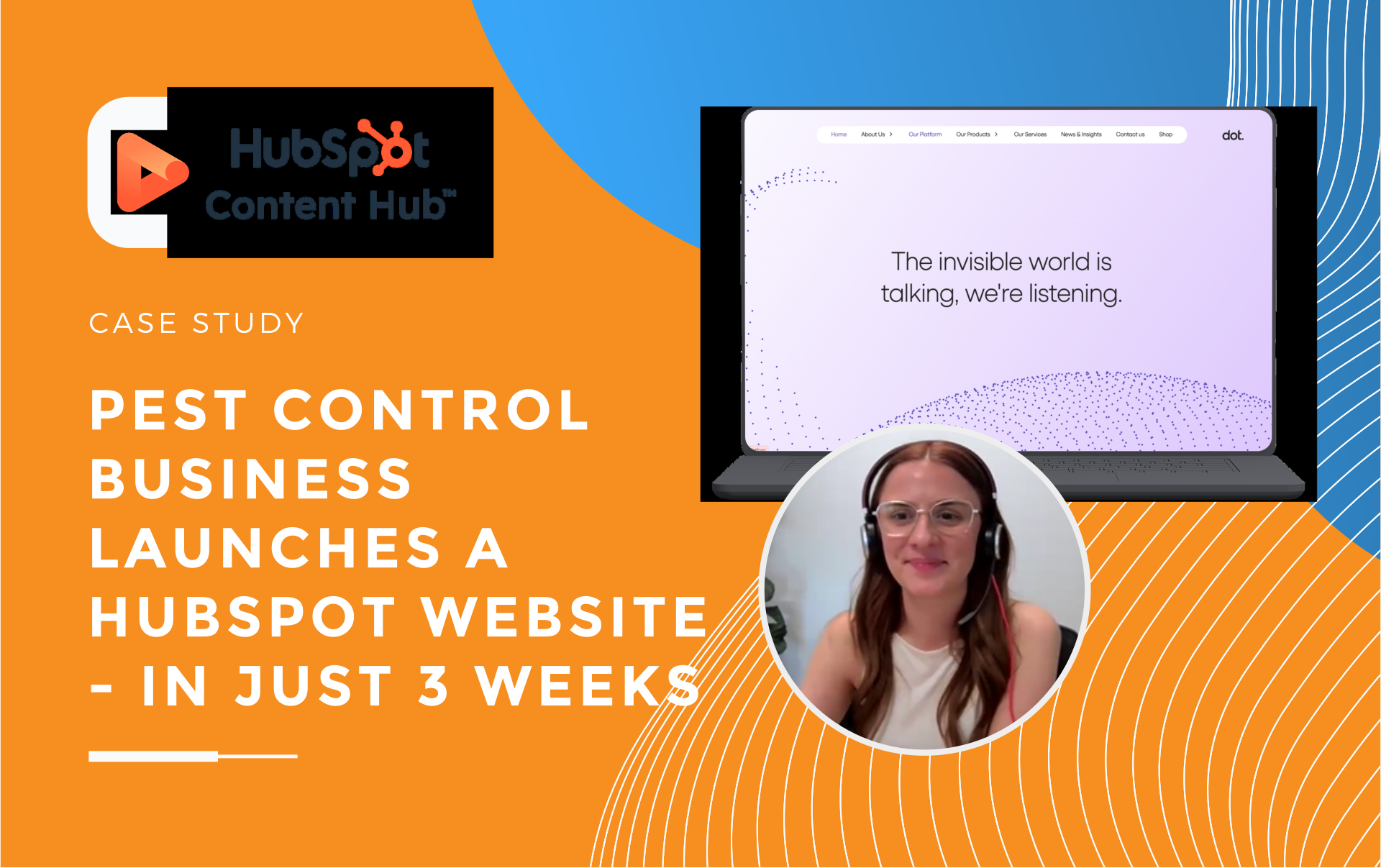
Web Design Case Study: Pest Control Business Launches A HubSpot Website - In Just 3 Weeks
When you are launching a new business, your website needs to do more than simply look professional. It needs to give you credibility from day one, exp …